
American Female Voice Over for Commercials and Narration
An American female voice over is one of the most requested categories in the voiceover industry, and also one of the most misunderstood. Buyers often search for it as if it describes a single sound, a bright, friendly woman reading a script with a smile in her voice. In practice, the label covers a wide range of deliveries: warm and conversational, crisp and corporate, calm and clinical, playful and youthful, or measured and documentary. The accent is American. Everything else depends on the script.
Maisie Trang is a voice over artist and actor based in Boise, Idaho, working with brands, marketing teams, eLearning developers, healthcare organizations, and content creators on projects that need a natural American female read. Her portfolio includes commercial voice over, narration for corporate and documentary work, eLearning and training modules, medical and healthcare narration, and explainer video voiceover. Projects are booked directly, with custom auditions available on request.
What the Term American Female Voice Over Describes
Strip away the marketing language and the phrase answers three casting questions at once. First, the performer is a woman. Second, the performance is in American English, usually a general American accent that reads as neutral to listeners across the United States. Third, the job is voice over rather than on-camera work, so the performance lives entirely in the audio.
That combination is popular because it fits so many contexts. A general American accent travels well across regional markets, which makes it a safe choice for national campaigns, corporate training, and product explainers that will be heard in multiple states or countries. It also carries a particular set of associations for listeners: approachable, clear, and familiar.
Within that category, range matters far more than the label suggests. A thirty second retail spot and a forty minute compliance module both call for an American female voice, but they need very different energy, pace, and precision. A strong voice talent moves between those demands without sounding like a different person each time.
Where an American Female Voice Over Does the Most Work
Most bookings fall into a handful of project types, each with its own performance logic.
Commercials. Radio, television, digital pre-roll, and social spots. The read has to land a message in a short window, which means emphasis, timing, and a believable tone rather than a broadcast boom.
Corporate and documentary narration. Longer form scripts that explain, tell a story, or guide an audience through a company, a process, or a subject. Pacing and consistency carry these projects.
eLearning and training. Modules, onboarding programs, and compliance courses built by HR and learning teams. Clarity beats performance here, and pronunciation consistency across a course matters as much as tone.
Medical and healthcare narration. Patient education, clinical training, and healthcare communication. The read needs to be calm, precise, and respectful of terminology.
Explainer videos. Short product and service videos that pair a friendly, conversational voice with animation or screen capture.
Each of these has a different tolerance for drama. Commercial work rewards personality. Training work rewards neutrality and repeatability. A voice talent who understands that difference saves production teams a round of revisions.
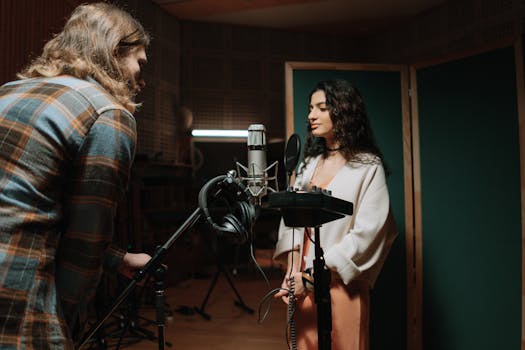
Why the American Part Matters More Than Buyers Expect
Scripts are written for a specific ear. American commercial copy is built around American rhythm, American idiom, and American pacing. When a script is read by a performer who learned a different accent, the words can be perfectly intelligible and still feel slightly off, like a song played at the wrong tempo.
Casting professionals ask for an American female voice over because they want a native read that does not sound performed. That is a subtle standard. It means natural contractions, comfortable vowel sounds, and an absence of the careful over-articulation that marks a non-native speaker reading unfamiliar copy. It also means the talent can spot a line that will trip up a listener and adjust on the fly.
Reading a Demo the Way a Casting Decision Gets Made
A commercial demo is usually the first filter. Talents build these reels with a wide variety of samples to demonstrate skill, vocal quality, and versatility, which gives a buyer a quick sense of whether the voice fits before anyone exchanges an email. Listen to the demo in the way your audience will hear the finished spot, on laptop speakers or a phone, not just in headphones.
A few things are worth listening for:
How the first five seconds land. If the opening does not hold attention, the rest rarely recovers it.
Whether the tone shifts between spots. A demo where every read sounds the same tells you the talent has one setting.
How the voice handles a hard sell and a soft sell. Commercial copy demands both.
Whether the recording quality is consistent. A clean room and a well-placed microphone should be audible in the first few words.
How natural the transitions feel. Good editing hides the seams between spots.
Once a demo gets a voice onto a shortlist, the custom audition decides the booking. Asking for a read of your actual script is the most reliable test available, because it shows how the talent interprets your words rather than someone else's.
Human Voice Talent Compared With AI Voice Generators
Synthetic speech has improved quickly. AI text to speech tools now market realistic American female voices, often with a free trial, and some creators use them for quick drafts. For internal scratch tracks, rough timing passes, and temporary audio while a video is still being edited, that can be a practical tool.
The limits show up when the audio has to carry a brand. A human talent reads for meaning. She can take direction, land a joke, soften a warning, fix a pronunciation, and match the energy of the edit on the other side of the timeline. She can also tell you when a line does not work as written. For anything client facing, that judgment is usually worth having. Buyers comparing options should read the licensing terms of any synthetic tool carefully, since usage rights vary by provider.
How to Brief an American Female Voice Talent
A good brief shortens the process for everyone. Before requesting a quote, gather the following:
The final script, with any pronunciation notes for names, brands, or technical terms.
A description of the audience and the feeling the piece should leave behind.
Reference audio if you have it. A single spot that captures the energy you want is more useful than three paragraphs of adjectives.
Target runtime or word count, so pacing can be planned before recording.
The file format your editor needs and where the audio will be placed.
Usage details: where the finished piece runs, in what markets, and for how long.
Usage is the part buyers most often forget. A voice over for a trade show loop and a voice over for a national campaign are different jobs even when the script is identical. Rates are quoted per project and depend on those details, so share them early rather than after the session.
Union, Non-Union, and Platform Options
The market offers several routes to an American female voice. Large studios advertise rosters of female voice talent, both union and non-union, with sessions and auditions available on request. Talent platforms, including ones built by voiceover professionals, focus on matching the right talent with the right projects. Freelance marketplaces list American female voice over services at a wide spread of experience levels.
Each route has tradeoffs. A big roster gives a casting team volume, which helps with large campaigns that need several voices. Marketplaces are fast and varied, though quality varies just as much. Booking a working artist directly tends to suit projects that need one specific voice, a custom audition, and a short line of communication. Details and terms on any platform or studio site change over time, so confirm current policies with the provider before committing.
What Booking Directly Looks Like
Direct booking is a simple sequence. You send the script and project details through a quote request form. If the fit is unclear, you can ask for a custom audition of a section of the script. Once the project is confirmed, the session is recorded, the audio is edited, and the finished files are delivered for your editor.
Working with a Boise, Idaho based artist does not limit a project to Idaho. Recording and delivery happen remotely, so clients across the United States and in other countries can book the same way a local client would. Ask about turnaround and availability when you request your quote, especially for projects with a fixed launch date.
Frequently Asked Questions
What is an American female voice over?
It is a voice over performed by a woman in American English, usually with a general American accent that sounds neutral to listeners across the country. The category covers commercials, narration, eLearning, medical scripts, and explainer videos, and the delivery inside it ranges from warm and conversational to formal and authoritative.
Can I hear a sample before booking?
Yes. Audio demos are available on the site, covering commercial, narration, eLearning, medical, and explainer work. If your script has specific demands, you can request a custom audition of a section so you can hear the voice on your own words before making a decision.
Is a human voice still needed if AI can generate one?
For internal drafts and rough timing, a synthetic voice can be useful. For anything a customer or employee will hear, a human talent brings interpretation, direction, pronunciation fixes, and a performance that matches your edit. Check the licensing terms of any AI tool, since usage rights differ between providers.
Do you work with clients outside Boise, Idaho?
Yes. Recording and file delivery happen remotely, so brands, agencies, and learning teams anywhere can book the same way a local client would. Share your timeline and delivery requirements with your quote request so availability can be confirmed against your launch date.
What do you need to quote a project?
Send the script, the intended use, where the audio will run, how long it will be used, your target length, and the file format your editor needs. Those details determine the scope of the work, and a complete brief usually means a faster, more accurate quote.
